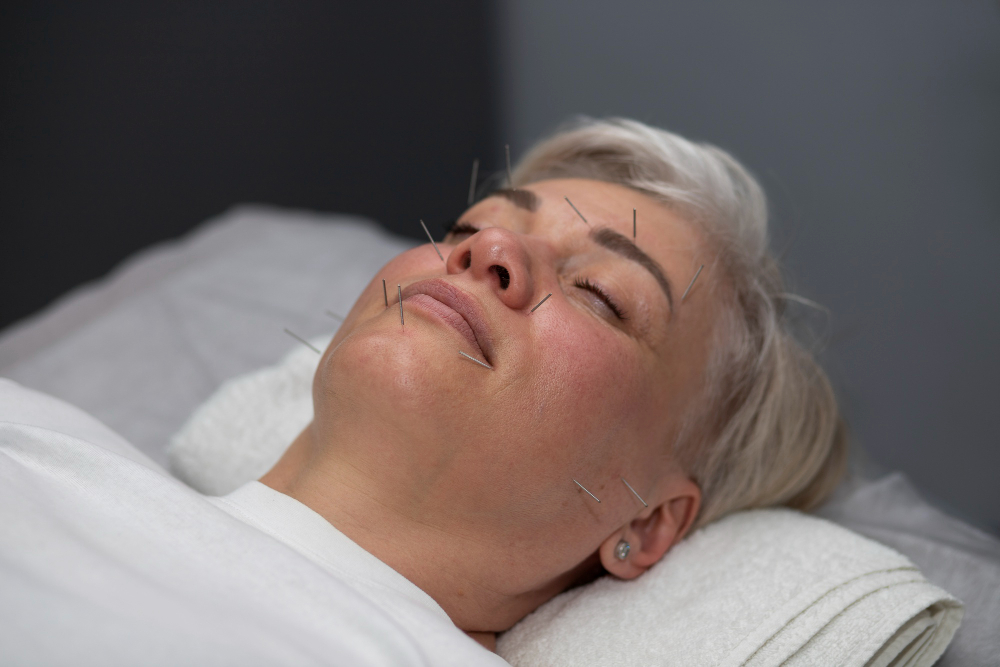
You have made the exciting decision to grow your family. However, what you expected to happen “naturally” and easily has started to feel a bit more complicated. Between questionable advice from your sister-in-law and the overwhelming rabbit holes of Google, it is easy to feel lost.
I recently completed an intensive two-day CPD course on fertility with Paul Johnson. Paul possesses a wealth of knowledge, and the course provided me with incredible insights into treating fertility for both natural and IVF-assisted conception. After completing this course, I became a member of the Acupuncture Fertility Network (AFN). I now feel more prepared than ever to support the women who come to me, and I want to share some of that fresh insight with you here.
If you have heard that acupuncture might be the key to “getting a bun in the oven,” you are not alone. Many people arrive at my clinic with the same question: How can tiny needles help me get pregnant? The answer lies in a perfect blend of ancient tradition and modern science.
The Science: How Acupuncture “Turns the System Back On”
In Traditional Chinese Medicine (TCM), we view fertility as a flow of energy (or “Qi”). When that flow becomes blocked, imbalances occur. From a Western perspective, we now understand that acupuncture communicates directly with your nervous system to create physical change:
- Regulates the “Command Center”: Acupuncture affects the hypothalamic-pituitary-ovarian (HPO) axis, which controls your reproductive hormones. Research published in Gynecological Endocrinology shows that electroacupuncture can help balance levels of LH and oestrogen in women with ovulatory dysfunction.
- Boosts Blood Flow: A landmark study in Fertility and Sterility found that acupuncture can increase blood flow to the uterus by reducing “impedance” in the uterine arteries. Think of it as upgrading your uterine lining from a “budget motel” to a “five-star luxury suite” for an embryo.
- Regulates Cycles: For those struggling with irregular periods or PCOS, a 2023 systematic review confirmed that acupuncture significantly improves ovulation rates and menstrual frequency.
- The Stress Factor: When you experience stress, your body enters “fight or flight” mode. Your brain perceives you as running from a lion, so it shuts down reproduction. Acupuncture flips the switch to “rest and digest,” lowering cortisol levels—a benefit highlighted in research on IVF outcomes.
- It Takes Two: Don’t Forget the Men. Fertility is a shared journey, and acupuncture benefits men just as much. A 2005 study showed significant improvements in sperm motility and morphology after just five weeks of treatment.
In my clinic, beyond the needles, I examine the lifestyle factors that prepare your body for a baby and provide you with plenty of personalised lifestyle advice. We explore what you are already doing well and what can be improved in depth!
- Temperature Charting (BBT): Your morning temperature serves as a window into your hormones. It can indicate whether you are ovulating, if your progesterone levels are stable, or if your thyroid needs a check-up. Additionally, observing your cervical mucus can help you understand your cycle and pinpoint ovulation even better. Remember that while women are only fertile for three days before ovulation and on the day of ovulation, sperm can survive in a woman’s body for five days, so the five days before ovulation should not be overlooked!
- A Healthy Diet: As many of you likely know, a healthy diet is crucial for fertility, and there are many factors to consider. Not everyone realises that hormones are made from cholesterol, which means you need good fats in your diet! Aim for a plate that consists of 50% rainbow-coloured vegetables, 25% high-quality protein (organic meats, wild salmon), and 25% healthy fats (avocado, nuts, seeds).
- Reduce Toxin Exposure: Our modern world is filled with “endocrine disruptors.” Try to replace plastic with glass, avoid SLS and parabens, and swap non-stick Teflon pans for stainless steel or cast iron. Also, avoid anything with fragrance or parfum listed on the label, as it usually indicates a chemical fragrance.
- Exercise: Gentle exercise is very beneficial as long as it is not too intense or aerobically based. Gentle yoga and short or even long walks work best.
- Prioritise Sleep: Quality sleep is the unsung hero of hormonal balance. Your circadian rhythm—your body’s internal clock—regulates the release of reproductive hormones, meaning irregular sleep can directly disrupt ovulation. Aim for a consistent sleep schedule in a dark environment to boost melatonin, a powerful antioxidant that protects egg quality and signals to your body that it is safe to conceive.
The 90-Day Window: Why Consistency Matters for Conception
It’s important to note that it takes approximately 90 days for an egg to mature and for sperm to regenerate. What you do today directly impacts the quality of your components three months from now. To give acupuncture its best shot and ensure your body is in peak form to conceive, we recommend a minimum three-month commitment to your treatment plan.
What to Expect at Your Session
Acupuncture involves more than just needles; it creates a safe space for your journey. A typical session includes a deep dive into your cycle history, a thorough health questionnaire, and a full TCM personalised diagnosis, followed by tailored points for your specific phase (follicular, ovulation, or luteal), with minimal discomfort and an opportunity to deeply relax. Most of my clients actually enjoy the best nap while the needles work their magic!
Ready to take the next step?
Acupuncture serves as a powerful, research-backed ally that offers a gentle, non-invasive way to support your body’s natural wisdom.
If you would like to see how these principles apply to your specific journey, I offer a free 15-minute chat to discuss your needs.
References:
- Uterine Blood Flow: Stener-Victorin E, et al. (1996). Reduction of blood flow impedance in the uterine arteries of infertile women with electro-acupuncture. Human Reproduction.
- PCOS & Ovulation: Li et al. (2023). Acupuncture for polycystic ovary syndrome: A systematic review and meta-analysis. Frontiers in Endocrinology.
- Stress & Anxiety: Domar AD, et al. (2011). The impact of acupuncture on in vitro fertilization outcomes. Fertility and Sterility.
- Male Fertility: Pei J, et al. (2005). Quantitative evaluation of spermatozoa ultrastructure after acupuncture treatment for idiopathic male infertility. Fertility and Sterility.
- Hormonal Regulation: Chen et al. (2008). Effects of electro-acupuncture on reproductive hormone levels in patients with ovulatory dysfunction. Gynecological Endocrinology.